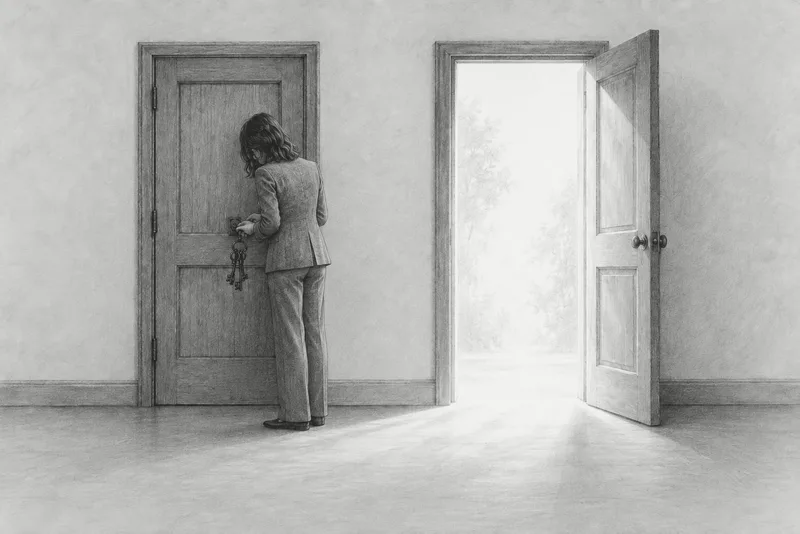
Where we look last for answers
An old parable about inner peace meets a systemic principle: when something outside is stuck, the most reliable lever lies in our own state and our own behaviour.

There is an old parable that Richard Schwartz, the founder of Internal Family Systems, likes to tell. The gods once debated where to hide inner peace, a good so precious that they wanted to keep it from careless hands. The first suggestion was to place it on the highest mountain, but there, they feared, people would one day find it. The second, to bury it in the deepest forest, failed on the same objection. The wisest of the gods finally proposed placing inner peace inside the people themselves, for that is where they would look last.
The story describes a movement I meet again and again in my work with leaders. Someone is responsible for a major undertaking and feels resistance from many directions. Stakeholders block, hold back, ask questions that feel like mistrust. The gaze turns entirely outward, toward the people who seem to stand in the way, and the question that comes into coaching is almost always the same. How do I position myself better against this resistance. It is a search for an answer, and it looks everywhere first except where the answer is most likely to be found.
Resistance as a jointly produced pattern
This question rarely leads to the solution, because it treats resistance as a weather event to be met with the right tactic. The systemic view sees it differently. A recurring pattern between people is always jointly produced, each contribution calling forth the next. Whoever braces against resistance offers the other side exactly the surface it can push against, and the dance continues.
In such situations I like to begin by exploring the inner competence that is already there. Some know this approach as work with an inner mentor, an instance within us that has already moved through a similar situation calmly and clearly. From there the real question becomes accessible, namely which inner parts are at work when I feel resistance.
What lies beneath the protective part
What often shows itself is a protective part that pushes for position and defence. It means well, it wants safety and control over an undertaking one is answerable for. Beneath it usually lies a different need, one for connection, for trust, for the sense of working with people. As soon as this deeper wish is given room again, the stance with which someone enters the room changes.
The answer that emerges often surprises the person themselves. The next step carries nothing tactical, it consists in the simple decision to seek personal contact, to listen to people, to pay into what Stephen Covey called the emotional bank account. The resistance loses its friction, because the stance it had caught on is no longer the same.
Our own change as the most reliable lever
Here the parable meets a systemic principle I have seen confirmed in many coaching sessions. When we want to move something in a stuck situation, our own change is the most reliable lever we hold. The other side can seldom be talked round directly. What stays within reach is our own state and our own reaction. As soon as I reliably change my part in a pattern, the other side can no longer dance the old dance in the same way, because one dancer has changed the steps. The pattern shifts with certainty, where it shifts is left to the shared movement. The answer to a situation out there thus often lies where we look last.
The inner peace the parable speaks of therefore works outward. It creates the state from which a different presence in the shared field becomes possible. Whoever leads from a calm, clear place changes the way they stand in the room, and the system answers to that changed presence. The courage this asks for is a quiet one. It turns the first glance to where we usually look last, and finds there the answer that was not to be had outside.
Further reading
- IFS in coaching: a field report – how working with inner parts unfolds in a coaching session.
- The emotional bank account in leadership – why deposits into the relationship dissolve resistance.
- I want vs. one should – why the responsibility question creates movement.
Want to read this offline or share it?
Related posts
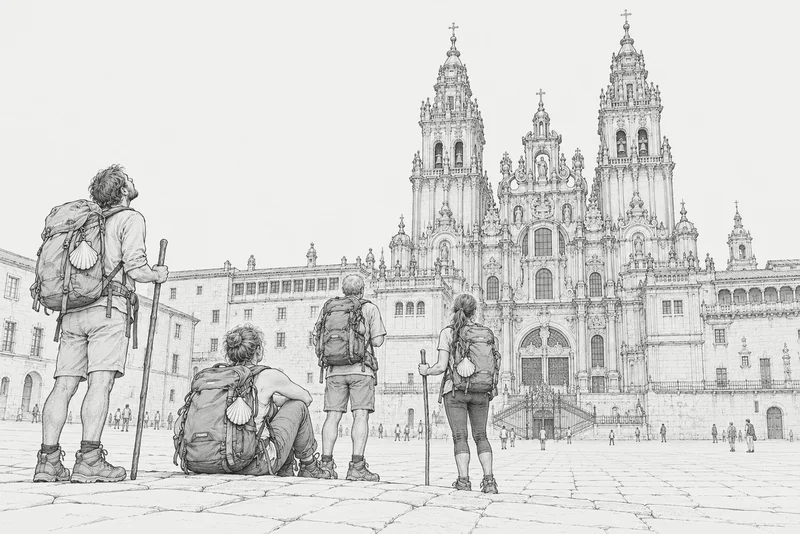
What the Camino de Santiago Teaches About Collaboration
On the Camino, strangers help each other as if it were the most natural thing in the world. The anthropologist Victor Turner called this communitas. What makes the Way different from everyday life, and which of its conditions leaders can bring into their teams.
Not every solution begins with the why
Many clients first want to understand why they behave as they do. Why the explanation rarely brings the change, and the question that turns the view forward.