Your first leadership role. Everything is new. Much of it quieter than you thought.
From peer to manager in a single moment, and nobody prepared you. Coaching for new leaders creates the reflective space that decides during the first 100 days whether uncertainty turns into a leadership identity of your own.
What changes in the move from peer to manager
Yesterday you were a colleague, today you are a manager. Relationships in the team change overnight, and nobody prepared you. The lunch you are no longer invited to says more than any org chart.
You should delegate, but it feels faster to do it yourself. You should give feedback, but you do not know how without damaging the relationship. You should appear confident, but inside you feel uncertain.
Expectations from above and below contradict each other. Your boss wants results, your team wants direction, and you are caught in between trying to do justice to both.
You are looking for someone who does not tell you how leadership works in the textbook, but who understands what it feels like the first time you are in the role.

How coaching supports new leaders during their first 100 days
Nonviolent communication and the triple buffer
Give feedback without wounding. And respond with poise when someone gets personal.
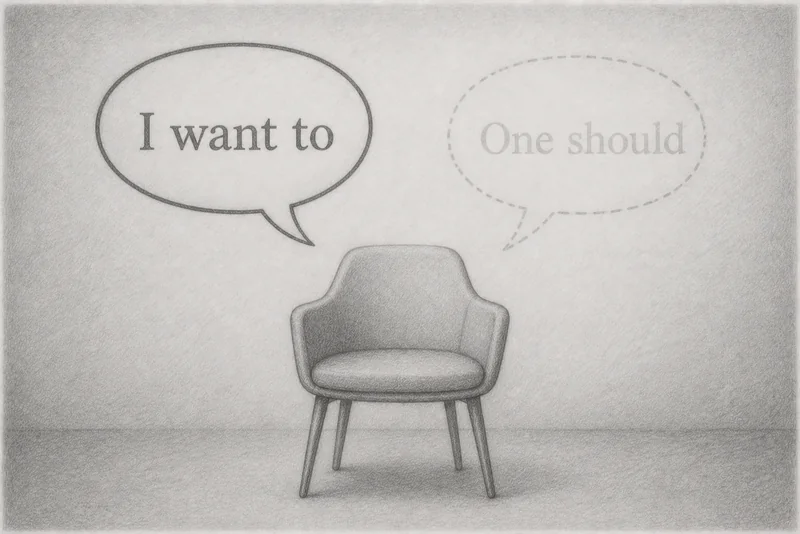
Nonviolent communication and the triple bufferFrom “I want to” to “one should”
How your inner dialogue shapes your outer impact and why a single word makes the difference.
From “I want to” to “one should”Grass does not grow faster
A career inside a corporation needs patience, visibility, and the ability to know your circle of influence.
Grass does not grow fasterFour stages of learning
Why the uncertainty of the first weeks pays off and how conscious practice becomes unconscious competence.
Why I did my coaching training twiceSituational Leadership and the R4 trap
Why delegating is not always the right answer and when directing, coaching or supporting fits better.
Why delegation is not always the answer: the Situational Leadership model and the R4 trapWhat clients say
Authentic, tailored, and consistently goal-oriented
„My expectation at the beginning of the coaching with Thomas was to improve my communication in very specific and therefore challenging areas. What I received was an exceptionally precisely tailored accompaniment. With his authentic manner, Thomas always challenged me positively – always accurately assessing what I needed to push my limits without ever feeling uncomfortable. Highly recommended – and I look forward to further sessions."
I could not have asked for a better coach
„I could not have asked for a better coach than Thomas Knoop. I took away a great deal. The concept works brilliantly – provided you choose the right coach."
Further insights
Nonviolent Communication: Triple Buffer
Nonviolent Communication after Rosenberg and the triple buffer: two techniques for leaders when conversations get personal and threaten to escalate.

From “I want to" to “One should"
How we disempower ourselves in conversation with ourselves without noticing it, and how a single word decides between effectiveness and presence in a leadership role.
Corporate Careers: Grass Grows in Its Time
On Stephen Covey's Circle of Influence, Deci and Ryan's Self-Determination Theory, and the difference between worry-bearers and shapers in corporate careers.

Coaching Training: Why I Did It Twice
On the difference between knowing and being able, and why I went through the four stages of learning.

R4 Trap: Delegation That Overwhelms Teams
On Hersey and Blanchard's Situational Leadership model, the R4 trap I see in coaching, and the craft of leading each team member according to their readiness for a given task: directing, coaching, supporting, delegating.

Common questions about your first leadership role
- What does coaching add in the first 100 days?
- The first 100 days shape how your team perceives you and whether trust forms. Coaching gives you a reflection space in this phase where you can rehearse situations before they count in daily life. Like the triple buffer: what you have practised once will succeed much better the next time.
- How do I find my leadership style?
- Not through a model from a textbook, but through deliberate trial and reflection. In coaching we make your natural strengths in leadership situations visible and develop a style that fits you, instead of imitating someone else's.
- Is coaching for aspiring leaders not overkill?
- On the contrary. The earlier you develop good leadership habits, the less you have to correct later. A wrong hire in a first leadership role costs the company and the person involved considerably. Coaching at this stage is an investment, not a luxury.
- How does coaching actually work?
- Free 30-minute introductory call, then regular sessions every 2–3 weeks over 3–6 months. Online or in Berlin. Each session is tailored to your current situation. You bring the topics, I bring the methods.
- What does it cost?
- A single session is between EUR 100 and 175, depending on duration, format, and package scope. Talk to your HR department, too, many companies cover the cost of coaching for new leaders.
The most important decisions of your career are happening right now. Let us talk about them.
If you look back on your first leadership role a year from now: what do you want to be grateful for?
Book a call