Emotional Triggers: Echoes from the Past
Why we sometimes react with a 100 to a trigger that was a 3: how IFS and protective parts explain emotional triggers in everyday leadership.

Do you know this? A colleague makes a casual remark in a meeting, and someone reacts as if the ground had been pulled from under them. A leader receives matter-of-fact feedback on a project, and flares up as if their entire competence were in question. A team member is asked to hand over a task, and reacts as if everything were being taken away.
From the outside such reactions look disproportionate. And that is exactly what they are, measured against the current trigger. But they are entirely proportionate once you understand what they are actually responding to.
The 100 and the 3
Imagine a child experiencing a deeply hurtful situation. Perhaps it is shamed, overlooked, or left alone in a moment of helplessness. The emotional force of this experience, let's call it a 100, is overwhelming for the child. It develops a reaction equal to that intensity: withdrawal, rage, conformity, control. Whatever helps in that moment to survive.
Years or decades later this child sits as an adult in a meeting room. Someone says something that bears a faint resemblance to the old situation. Maybe a particular tone of voice. Maybe the feeling of not being seen. Maybe a judgment that recalls an earlier humiliation. The current trigger is a 3, a triviality, viewed objectively.
But the reaction is not a 3. The reaction is a 100.
What has happened: the current stimulus has activated an old echo. In that moment the nervous system does not distinguish between then and now. It recognises a pattern and triggers the full programme, the entire emotional reaction from then, with the full intensity of then. Hypersensitivity rarely explains it. An inner part is still protecting the old wound.
What This Means for How We Treat Each Other
When we encounter a reaction in someone else that seems disproportionate, we have a choice.
The first option is to take the reaction at face value: exaggerated, inappropriate, unprofessional. That is the obvious assessment, and it often feels justified.
The second option is to pause for a moment and ask: what if I'm not seeing the reaction to my remark, but the echo of an experience I know nothing about?
There is a sentence often attributed to Robin Williams, although the origin cannot be clearly traced and the idea is probably much older:
"Everyone you meet is fighting a battle you know nothing about. Be kind. Always."
I find this is the best stance one can bring to such moments. Not permissiveness. Not accepting everything. But the willingness to assume more behind a reaction than what is visible on the surface.
The IFS Perspective: Protective Parts
In working with Internal Family Systems (IFS) there is an explanation for this phenomenon that I find very helpful in my coaching.
IFS assumes that our psyche consists of various inner parts. When a person has experienced something painful in the past, certain parts take on a protective function. They make sure the old wound is not repeated. These protectors are vigilant, fast, and powerful, because they had to be.
The problem: they don't precisely distinguish between a real threat and a superficial trigger. To the protective part, the 3 feels like a 100, because it never processed the 100 from then. It is not reacting to the current situation, it is reacting to the old one.
It is a protective strategy that once served its purpose and was never updated.
What I See in My Coaching
In my work with leaders I encounter these patterns regularly. High pressure, visibility, and evaluative situations provide exactly the triggers that activate old echoes.
A few examples I see again and again:
A leader who immediately counterattacks under critical feedback, because an inner part has learned that criticism means danger.
A manager who cannot let go of control, because a part of him equates loss of control with defenselessness.
A founder who immediately gives in during conflicts, because a part has learned that harmony is the only safe strategy.
In all these cases the solution does not lie in simply changing the behaviour. Willpower alone is not enough when a protective mechanism is active that is stronger than the resolution. The solution lies in understanding the protective part, honouring its function, and together giving it a new role that fits today's reality.
What This Can Mean for You
Whether as a leader, a colleague, a partner, the realization that emotional reactions are often echoes and not answers to the here and now changes how we treat one another.
It changes how we look at apparently exaggerated reactions in others: with more equanimity and less judgment.
It changes how we deal with our own disproportionate moments: with curiosity rather than self-criticism.
And it changes the question we ask. No longer: What is wrong with this person? But: What has this person experienced that I know nothing about?
Be kind. Always.
Further reading
- IFS Institute (Richard Schwartz) – Official source on the Internal Family Systems model.
- Richard Schwartz: No Bad Parts (Sounds True 2021) – Introduction to the IFS view on protective parts.
Frequently asked questions
- Why do some people react so strongly to apparent trivialities?
- Because the current situation activates an old emotional echo. The nervous system does not distinguish between then and now, it recognises a pattern and triggers the full programme.
- What are protective parts in IFS?
- Protective parts (protectors) are inner parts that, after a painful experience, have taken on the task of preventing a repetition of the wound. They are vigilant, fast, and powerful, and often respond to even superficial triggers with full force.
Want to read this offline or share it?
Related posts
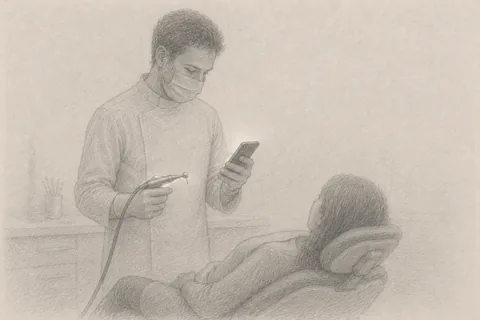
The Dentist Test
At the dentist we take undivided focus for granted. Almost half of our own interruptions we cause ourselves. A field report on focus as a leadership discipline, with Gloria Mark's 23-minute rule, Sophie Leroy's attention residue, and three very concrete moves from a coaching session.
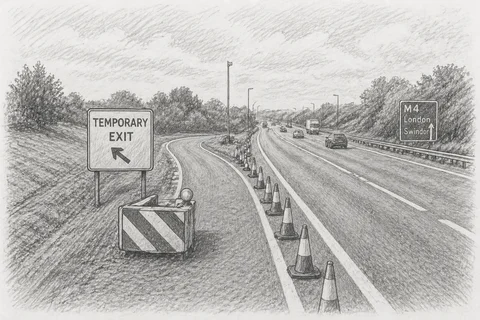
Temporary Exit: Stress and Old Patterns
On the motorway of habit, the temporary exit from coaching, and the four stages of real change: why new behaviour is first noticed only in hindsight before it eventually arrives on time.