Corporate Careers: Grass Grows in Its Time
On Stephen Covey's Circle of Influence, Deci and Ryan's Self-Determination Theory, and the difference between worry-bearers and shapers in corporate careers.
"Mr Knoop, what do I have to do to take the next step?"
I hear this question often. Usually it is ambitious, talented people who are willing to go the extra mile. My answer regularly surprises them. Because a career has only limited to do with hard work. It has a great deal to do with where you direct your energy and with the art of creating the conditions for success rather than managing worries.
Worry-bearer or shaper
I recently coached a client facing a major challenge. She was to introduce a new, complex HR tool across the company. The decision for the tool had been made long ago, by someone else. But she was now responsible for the result.
She came to coaching with a long list of concerns. She wanted to know how to "make the risks transparent". In practice this is often code for hedging against impending failure: if it goes wrong, I did say it would be hard.
We changed perspective. Instead of spending energy on what could go wrong, we formulated the conditions for success. What does it take to make this project fly? What resources, what decisions, what support?
The shift was fundamental. In The 7 Habits of Highly Effective People Stephen Covey describes the difference between the Circle of Concern and the Circle of Influence. Anyone who pours energy into worries they cannot influence shrinks their room to act. Anyone who concentrates on what they can shape grows their influence. My client made exactly that shift. She came to coaching as a worry-bearer and left as a shaper. Instead of explaining to the board why it would be difficult, she formulated what it would take to succeed.
In my article When the job wobbles I describe this model in more depth. Here we see an application that goes beyond crisis: the Circle of Influence is also the key to strategic career design.
High Impact, High Profile
If you really want to rise, my advice is simple: find yourself a task with management visibility. I call these "High Impact, High Profile" projects.
Such a project carries strategic relevance for the company. It might be winning back five percent of margin, rescuing an at-risk customer relationship, or introducing a technology on which the company's future depends. In these projects you see what really makes a leader: the courage to take responsibility, the will to stay the course against headwinds, and the ability to steer a team through resistance.
I remember well my own project many years ago. It was about achieving a breakthrough in LED technology with an Asian partner. My mentor at the time gave me a sentence I still carry with me: "Learn to enjoy pressure." He was right. In such phases your integrity becomes visible. Will you become a yes-man because you are afraid for your status? The notorious "golden handcuffs" of salary, company car and bonus keep an astonishing number of leaders trapped in a comfort zone where they stop speaking uncomfortable truths. Or do you stay independent enough to say no when it serves the long-term good of the company?
The research backs this. With their Self-Determination Theory, Edward Deci and Richard Ryan have shown that people perform best when three basic needs are met: autonomy, competence and relatedness. High-Impact projects serve all three. They give autonomy because they often sit outside routine processes. They challenge competence and grow it at the same time. And they create relatedness because you work in a team striving together towards a demanding goal. Anyone who finds such a project invests in their career without waiting for a promotion.
The equanimity of the gardener
For all the ambition there is a limit. In my article Why nobody steps back I describe the Peter Principle and the trap of promotion as an end in itself. Anyone who wants the next career step too badly often loses the authenticity and inner independence needed to hold up at the next level.
There is an old piece of wisdom I share with clients in such moments:
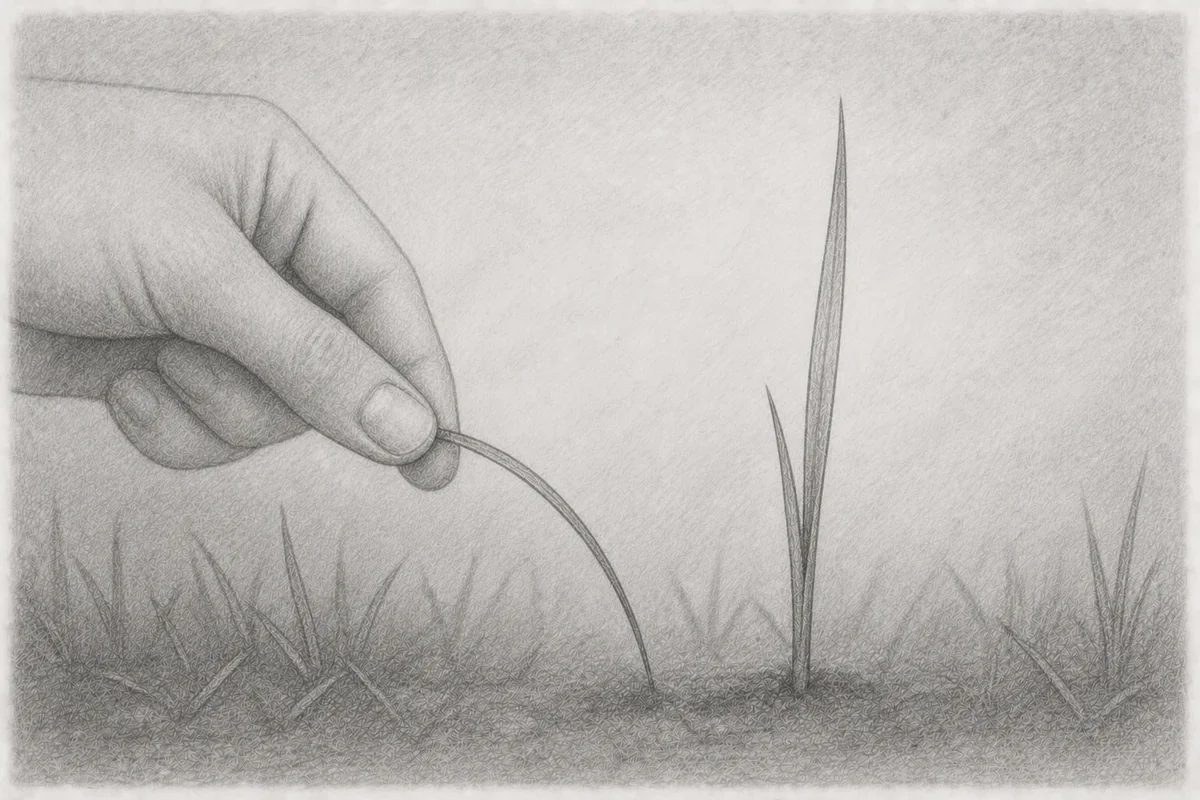
Grass does not grow faster if you pull at it.
A career cannot be forced. Anyone who pulls hard at their promotion becomes visible to those around them as someone who cares about the rise, not the work. And that is what people in decision-making positions notice. They rarely promote those who shout loudest. They promote those who, they sense, would take on the task even without a title or a raise attached.
Only those who feel they could hand back the laptop and the keys at any time make truly free decisions. That sense of inner independence is the prerequisite for holding up at the next level. Because there the decisions get harder, the compromises more painful and the pressure greater. Anyone who sits there only because they wanted the title will fail. Anyone who sits there because they want the work has a chance.
What you can take with you
Choose your tasks wisely. Find the stage where you become visible, but do not play a role there; be authentic. Formulate what it takes for something to succeed, instead of explaining why it will be hard. And then let the grass grow.
The best careers I have coached are not the steepest. They are the ones in which people remained themselves along the way.
Further reading
- Stephen R. Covey: The 7 Habits of Highly Effective People (Free Press 1989) – The Circle of Influence stems from Habit 1, "Be Proactive".
- Self-Determination Theory (Deci & Ryan) – Research on autonomy, competence and relatedness as the basis of intrinsic motivation.
- My book Peter mag keinen Frosch zum Frühstück (Amazon) – This article builds on chapters from it.
Frequently asked questions
- How do you really advance in a corporate?
- A career has only limited to do with hard work. What matters is where you direct your energy. Three levers: first, move from worry-bearer to shaper (Circle of Influence rather than Circle of Concern). Second, deliberately seek "High Impact, High Profile" projects with management visibility. Third, keep enough inner independence to be able to say no.
- What are "High Impact, High Profile" projects?
- Projects with strategic relevance for the company and visibility at the top. Examples: winning back five percent of margin, rescuing an at-risk customer relationship, introducing a technology on which the company's future depends. In such projects you see what really makes a leader: the courage to take responsibility, the will to stay the course against headwinds, and the ability to steer a team through resistance.
- What is the Circle of Influence?
- In "The 7 Habits of Highly Effective People" Stephen Covey describes the difference between Circle of Concern (worries we cannot influence) and Circle of Influence (what we can shape). Whoever directs energy at the Circle of Influence enlarges it. Whoever lingers in worries loses room to act. In career development this distinction is the key to strategic self-leadership.
Particularly relevant for
Want to read this offline or share it?
Related posts
Reclaiming the Circle of Influence in a Job Search
After years of responsibility, waiting for a reply means checking your inbox constantly. Covey's Circle of Influence and three clear axes of package, location and content give the ground back.
Emotional Bank Account: Build a Balance
On Stephen Covey's image of the emotional bank account, Management by Walking Around, and why remote leaders in particular need time without an agenda for their teams, because otherwise every demand becomes a withdrawal from an empty account.